
An In-Office Workshop for Dentists and Their Teams
Making Dentistry Easier
Conversations That Help Patients Make Good Decisions About Their Care
Dentistry becomes easier when patients’ decisions become easier.
1½ Days | In Your Practice | Dentist and Team Together
DENTISTRY HAS GOTTEN BETTER. AND HARDER TO PRACTICE.
We can’t make everything about practicing dentistry easier. But we can make one important part easier.
Dentists today can offer patients extraordinary care. At the same time, practicing dentistry has become more demanding.
Rising overhead. Insurance pressure. Staffing challenges. Expensive technology. Patients who are increasingly careful about how they spend their money.
And the dentist often feels caught in the middle.
We can’t make all of those pressures disappear.
But we can make one important part of practicing dentistry easier:
the conversations you and your team have with patients.
Because when those conversations become easier, something important happens.
Patients’ decisions become easier.
More information doesn’t necessarily make treatment decisions easier.
Our Dentistry Has Outgrown Our Conversations
Dentistry has changed dramatically.
We diagnose better.
We have more treatment possibilities.
We can solve problems that were difficult—or impossible—to solve a generation ago.
But the way we communicate with patients hasn’t always kept pace.
When patients hesitate, our natural response is often to give them more.
More education. More photographs. More scans. More explanations. More reasons to move forward.
All of that information can be useful.
But more information doesn’t necessarily make a difficult decision easier.
The challenge isn’t simply getting patients to understand the dentistry.
It’s understanding what makes the decision difficult for the patient.
That’s where Decision Friction begins.
DECISION FRICTION
The difficulty a patient experiences when deciding what to do about their care.
We tend to think difficult treatment decisions are associated with expensive or clinically complex dentistry.
But that isn’t necessarily true.
$15,000 Recommendation
Ready to move forward
A patient may feel, clear, confident and ready to say yes.
$1,500 Recommendation
Still struggling to decide
Another patient may feel uncertain, have concerns, or need more time even with a smaller recommendation.
The difference isn’t simply the dentistry or the fee.
It’s the amount of Decision Friction the patient is experiencing.
What matters to this patient? What concerns them? What are they trying to accomplish? How does treatment fit into their life? Are they ready to make this decision now?
Once we begin seeing treatment acceptance through the lens of Decision Friction, the objective changes.
Instead of asking:
“How do we get this patient to say yes?”
We begin asking:
“What’s making this decision difficult for this patient?”
And that leads to a different kind of conversation.
the conversational workflow™
The right conversation. With the right patient. At the right time.
Patients don’t all need the same conversation.
Some need information. Some need help clarifying what matters most to them. Some need help understanding the recommendation. Some need time to work through the financial decision. And some simply aren’t ready.
The Conversational Workflow gives dentists and teams a practical way to recognize where a patient is in the decision and know what conversation should come next.
It becomes the common language that guides patient conversations throughout the practice.
01
Discover What Matters
Before recommending what to do, understand what matters to the patient.
Learn how the patient experiences their condition, what they want to change, what benefits matter to them, and how treatment needs to fit into their life.
02
Make Recommendations Personal
Patients need more than a description of procedures.
Connect the treatment recommendation to what you’ve learned about the patient so the recommendation makes sense in the context of what matters to them.
03
Explain Without Overwhelming
Patient education is important. But there comes a point when more information stops helping.
Learn how to explain what patients need to know without burying the decision beneath clinical detail.
04
Make Financial Conversations Easier
For many patients, understanding the dentistry is only part of the decision.
Learn how to talk about fees and financial choices comfortably, recognize when finances are creating friction, and help patients consider what is possible without pressure.
05
Recognize Readiness
Some patients are ready to proceed. Others aren’t.
Learn to recognize the difference—and stop trying to move patients farther or faster than they’re prepared to go.
06
Know What to Do When Patients Aren’t Ready
A patient who isn’t ready today may still value the care you’ve recommended.
Knowing what to say next can preserve the relationship, keep the patient connected to the practice, and leave the door open for future care.
Not Ready Doesn’t Mean No
Treatment acceptance isn’t the only measure of a successful patient conversation.
Traditional case-acceptance thinking tends to focus on getting the patient to yes.
But patients make decisions on their own timetable—not ours.
When a patient isn’t ready, continuing to explain, persuade, or overcome objections can create more Decision
Friction rather than less.
There is another way.
Recognize when the patient isn’t ready. Stop pushing for an immediate decision. Help them understand what comes next. Continue caring for them. Keep the relationship intact.
Keep the door open.
Because today’s “not now” may become tomorrow’s “I’m ready.”
Never make treatment acceptance a condition of a continuing relationship.
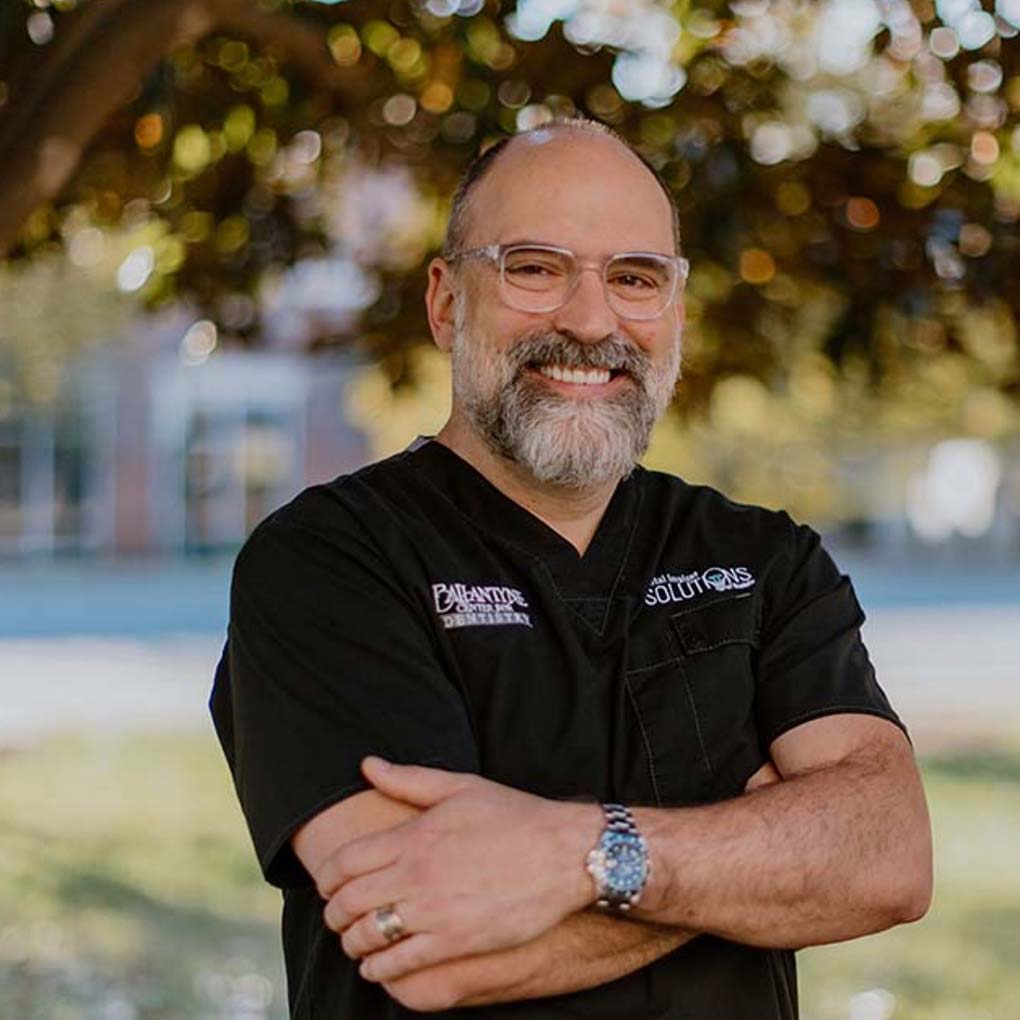
“The Greatest Influence in My Dental Career”
“Dr. Paul Homoly has, by far, been the greatest influence in my dental career. His philosophy has been so natural for my team and me to adopt. I recommend his books and programs to every dentist I meet who asks me what the ‘secrets’ are to our success.”
Dr. Christian Yaste
Complex-Care Dentist • Author • Dental Educator
Foreword to Making Dentistry Easier
Ballantyne Center for Dentistry, Charlotte, North Carolina



GET EVERYONE ON THE SAME PAGE.
The Conversational Workflow is the page.
Dentists often say,
“I want everyone on my team on the same page.”
The problem is, they often don’t have the page they want everyone on.
The Conversational Workflow gives the practice that page.
The dentist, hygienist, assistant, treatment coordinator, and business team don’t all have the same conversation with the patient. They shouldn’t.
But everyone should understand where the patient is in the decision, what has already happened, and what needs to happen next.
That creates greater continuity for the patient and greater confidence for the team.
And because Making Dentistry Easier takes place in your practice, your team learns together—using the situations, patients, and conversations they encounter every day.
Your team. Your patients. Your practice.
What happens when conversations get easier?
The immediate goal is straightforward: help patients make good decisions about their care.
But the effects of better conversations extend beyond a single treatment presentation.
For Patients
Patients feel heard before recommendations are made.
Treatment recommendations make more sense in the context of what matters to them.
Decisions feel less overwhelming and less pressured.
And when they aren’t ready, they know the relationship with the practice remains intact.
For Your Team
Team members become more confident about what to say—and what not to say.
Roles become clearer.
Patient conversations become more connected from one team member to the next.
And the team has a common approach for what to do when patients hesitate or aren’t ready.
For Your Practice
Dentists become more comfortable offering the care they believe is appropriate.
More patients who aren’t ready remain connected to the practice rather than disappearing.
Over time, more patients have the opportunity to choose the care you’re capable of providing.
And the practice becomes less dependent on getting an immediate yes from every treatment presentation.
case acceptance is a near-term outcome
Better conversations. A more intentional practice.
Better conversations
More complete care
A growing reputation
Greater opportunity and choice
Better conversations can improve treatment acceptance. But something larger can accumulate over time.
As you become more comfortable offering complete care, you do more of it. As you do more of it, your reputation for providing that care grows. More patients begin choosing your practice because of what you do and how you care for them—not simply because you participate with their insurance plan.
“The genius of Dr. Paul Homoly is his ability to put his lessons into a process that makes it easy for his students to follow. Paul coaches our key clinicians and our leadership team. From my 20+ years of functioning as a manager and leader, Paul is the best I’ve seen at what he does.”
JOE FELDSIEN — Senior VP of Professional Partnerships, Pacific Dental Services
“Dentists will be hugely successful when they balance their clinical skills with the case acceptance skills Dr. Paul Homoly has brought to us.”
DR. JOHN CRANHAM — Past Clinical Director, The Dawson Academy

Your Coach
Dr. Paul Homoly, CSP
Paul Homoly practiced implant and reconstructive dentistry for 20 years. He knows what it feels like to sit across from a patient who needs significant care — and to watch them hesitate.
For over three decades, he has taught dentists and their teams to communicate in a way that makes that hesitation disappear — not through persuasion tactics, but through genuine clarity and structured dialogue that guides patients to confident decisions.
Paul is the author of Making It Easy for Patients to Say “YES!” and the creator of the Treatment Acceptance Mastery online curriculum. His work has shaped the communication practices of dental teams worldwide — from solo practices to major DSOs.
Ready to Bring this to your team?